
Case study / 03 / Fabrication management system
RMV Stainless Steel Fabrication
An academic capstone designed for fabrication customers, staff, and administrators, covering appointments, project tracking, payments, documents, and fabrication progress in one role-based system.
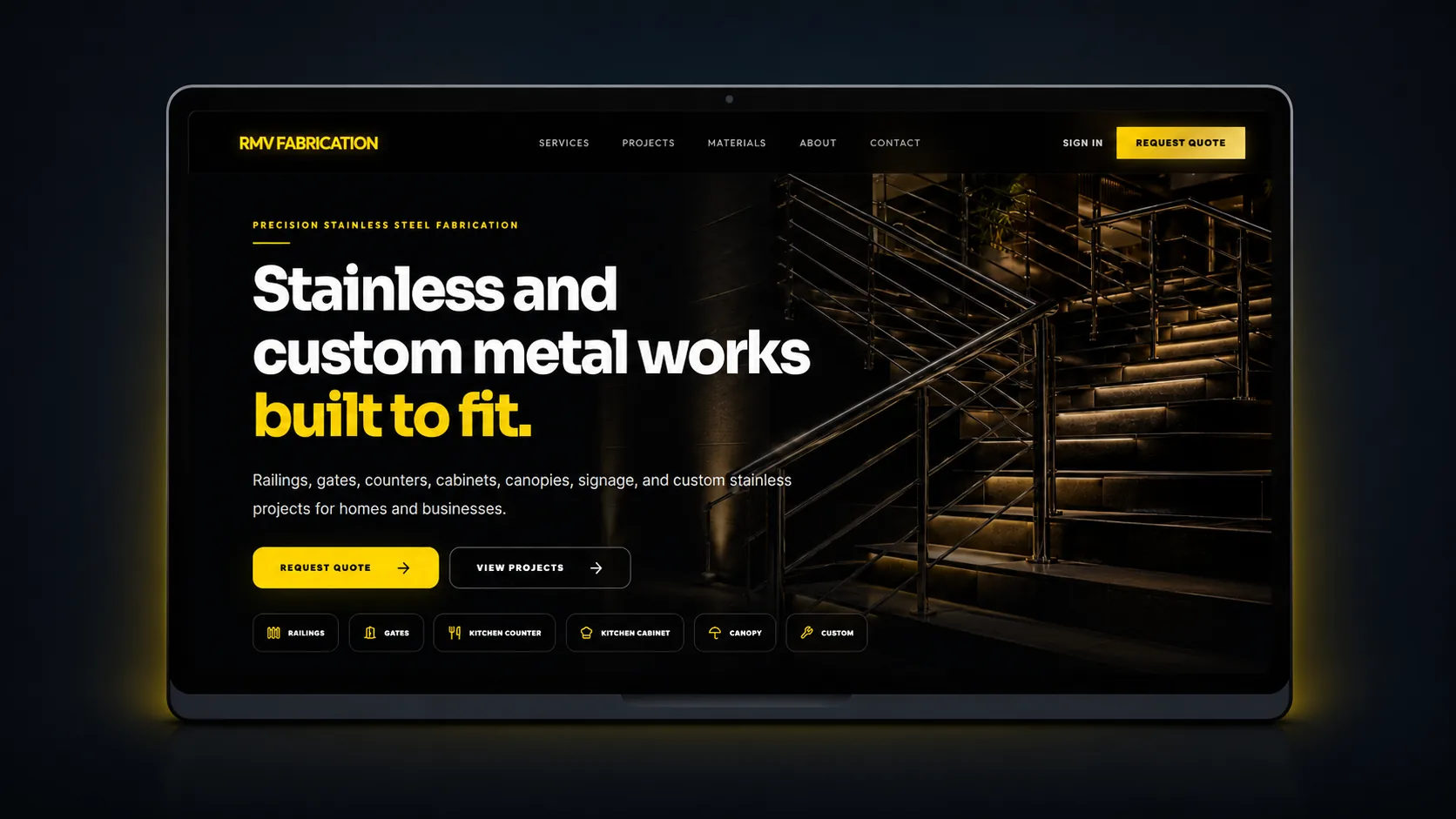
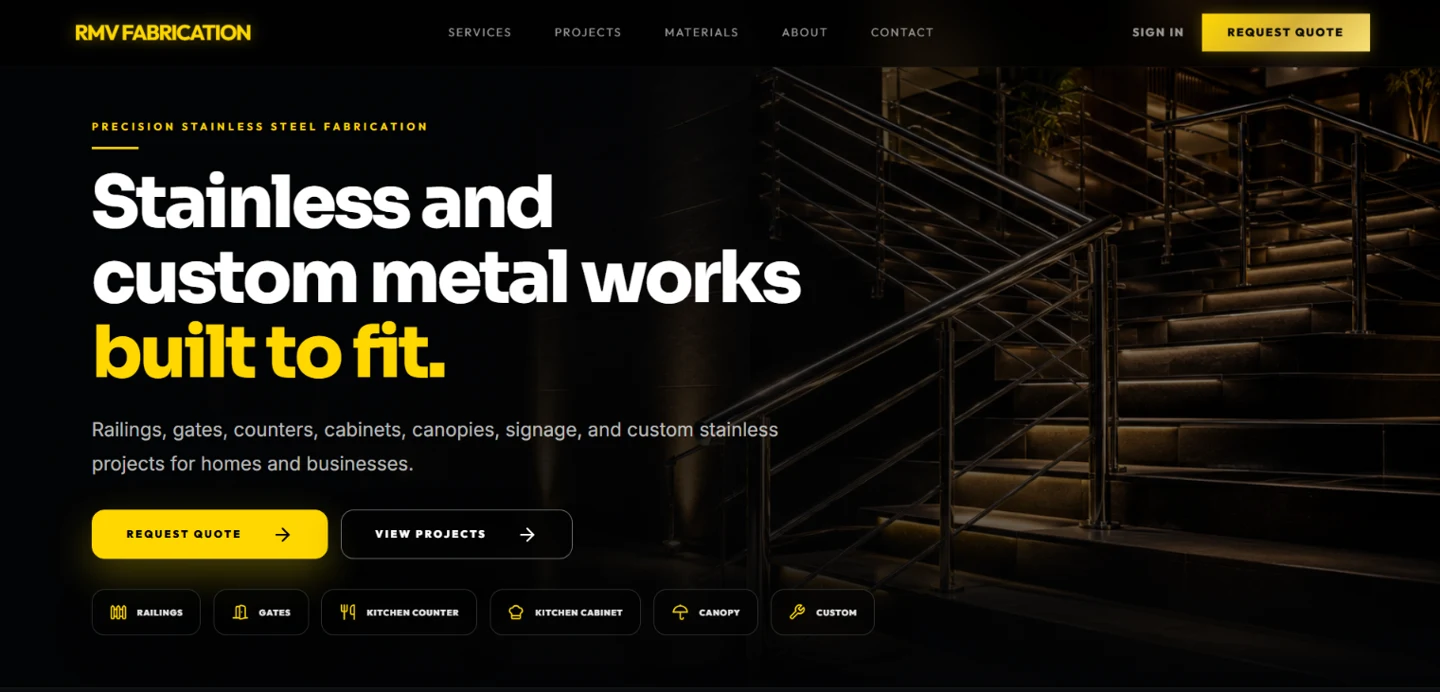
RMV Stainless Steel Fabrication / Interface overview
01 / Context
The problem to solve.
Appointments, quotations, project updates, payments, and fabrication records can become fragmented when customers, staff, and administrators rely on separate manual processes.
02 / Approach
From need to interface.
The capstone connects those steps in one role-based system, giving each account type the screens and actions needed for its part of the appointment-to-fabrication workflow.
What I built
- Responsive role-based dashboards
- Appointment and project workflows
- Payments, reports, and document handling
- Fabrication progress and notifications
03 / Implementation
How it fits together.
A React and TypeScript frontend consumes an Express REST API backed by MongoDB. Firebase supports authentication-related services, while Socket.IO, document handling, and PayMongo integrations support live updates, files, and payments. Docker, Nginx, and blue-green deployment scripts support the hosted environment.
Decisions that shaped the build
- Used role-specific dashboards instead of exposing one shared administrative interface
- Centralized workflow rules and validation in backend services
- Added state-machine, authorization, validation, and service tests around high-risk transitions
Challenges
- Modeling status transitions across appointments, projects, fabrication, and delivery
- Keeping customer, staff, and administrator access rules consistent
- Coordinating payment, file, notification, and real-time workflows
04 / Delivery & lessons
Built, tested, and still learning.
Testing
Frontend Vitest tests cover authentication routing, project access, report and engineer workflows, configuration safety, and contrast regressions. Backend Vitest suites cover authentication policies, validation, state transitions, payments, refunds, fabrication, and other services; smoke-test scripts exercise API and pipeline flows. Run `npm run test` in each repository and the documented smoke commands when test data is available. Full browser coverage and live-provider sandbox checks remain areas for further testing.
Deployment
The React frontend and Express API are deployed with Docker/Nginx operations documented in the repositories; a public demo is available.
What I took forward
- Business workflows need explicit state and permission rules before UI implementation
- Service-level validation is essential when several roles can affect one project
- Deployment and rollback procedures should be treated as part of the application